Seasonal · Winter Pool Care · Redding, CA
Winter Pool Service in Redding: What Changes From November to March
Winter pool service in Redding, CA usually means dropping from weekly to biweekly or chemical-only visits from roughly November through February, at $50–$100/visit or $100–$135/mo respectively, rather than closing the pool — Redding’s cool season runs mid-November to early March with December highs around 55°F and lows near 38°F, cold enough to slow algae to a crawl but rarely cold enough to require a Midwest-style winterization. As of September 2026.
Redding Pool Pro · Redding, CA · phone line live at launch · Updated September 12, 2026
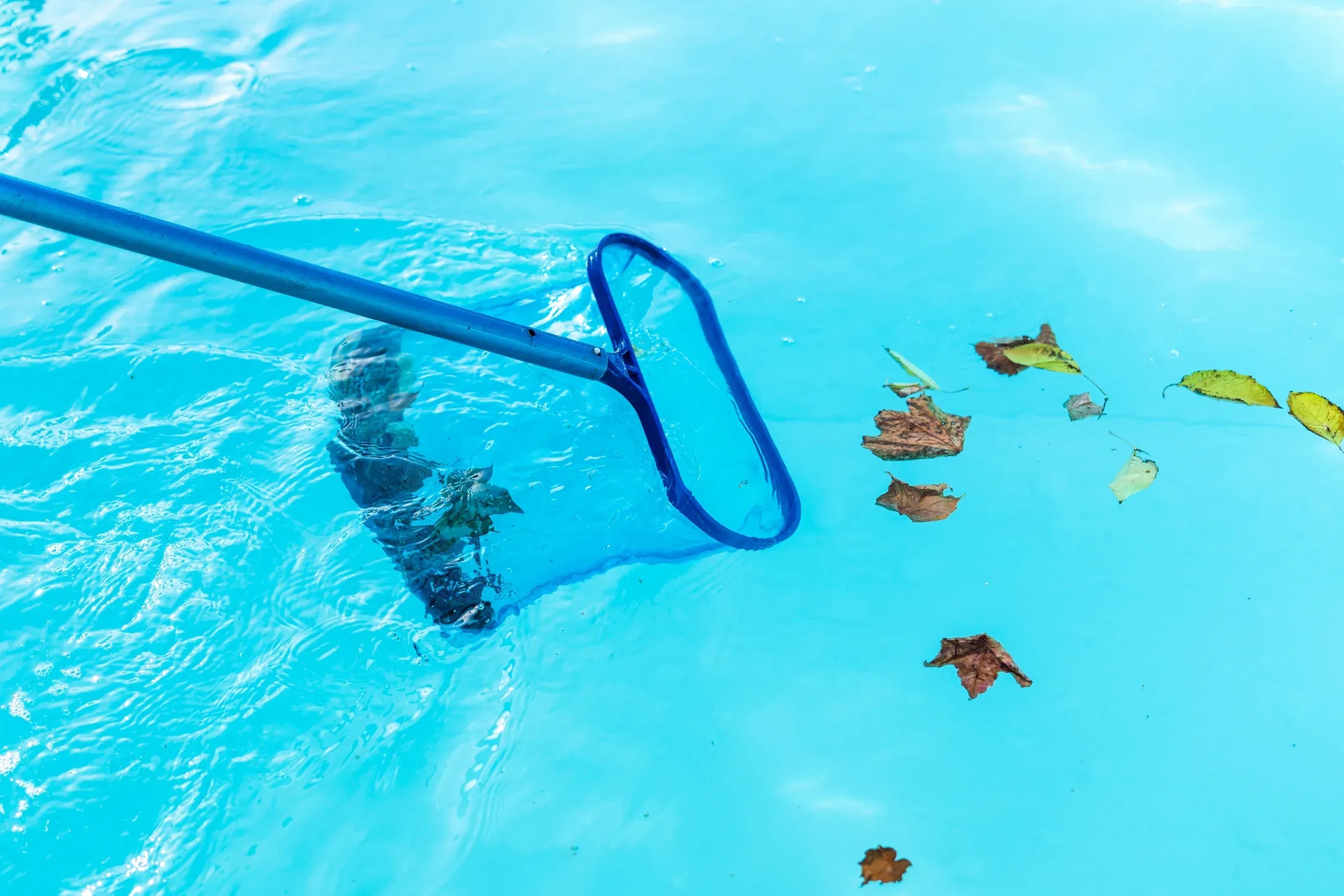
Most of the internet's advice about winter pool care is written for places where the pool freezes. Redding isn't one of them. Here the pool doesn't close — it slows down. Water temperatures fall into the 50s, algae all but stops, chlorine demand collapses, and the question becomes how much service the pool actually needs between the end of the hot season and the first warm weeks of April. This page covers what changes: the cadence, the price, the pump schedule, the chemistry, the heater, the rain, and the one thing Redding winters do occasionally deliver that you have to be ready for. The full price picture for the rest of the year is on the Redding pool service cost guide.
Redding's winter, in numbers
The hot season — daily highs consistently above 90°F — runs from June 13 to September 20. The cool season, defined as average daily highs below 63°F, runs about three and a half months from November 15 to March 3. December is the coldest and wettest month: an average high of 55°F, an average low of 38°F, and 6.8 inches of rain, against a tenth of an inch in August. The rainy period, taken broadly, stretches from early September to late June, but the real water arrives November through March. Two things follow for a pool. First, the water gets cold enough to stop algae but the air rarely stays cold enough to freeze moving water, so the right plan is "keep it running, service it less," not "drain it and plug it." Second, the pool spends winter under the year's leaf drop and rain — which is what the off-season visits are mostly for.
What service looks like in winter
From about May through September, Redding pools need weekly service — the weekly pool cleaning page explains why a missed July week is often a green pool. From roughly November through February, most route companies here switch to one of two plans. Biweekly: the same full visit — test and balance, skim, brush, empty baskets, check equipment — every other week, priced nationally at $50–$100/visit a visit. Chemical-only: a technician tests and doses the water and empties the baskets, and you handle skimming and brushing, priced at $100–$135/mo a month. Some companies instead bill a flat year-round rate that averages summer and winter, so the monthly number never changes but the winter visits are lighter or less frequent. Over twelve months a seasonal plan and a flat plan can cost about the same; the difference is cash flow and whether you want to think about it. March and April are the shoulder — companies step back up to weekly as water temperatures climb, usually before the first hot week rather than after it.
What doesn't change: the pool needs its baskets emptied and its chemistry checked all winter. A pool that sits untouched from Thanksgiving to Easter goes into spring with a stained floor, a filter full of leaf mulch, pH and alkalinity that have drifted for months, and a green-to-clean bill that costs more than the winter service would have.
Pump run time in winter
Summer turnover — running the pump eight hours a day or more — exists because warm water grows algae and burns chlorine fast. In 50°F water neither happens quickly, and a pump running four to six hours a day keeps the pool clear and filtered while cutting the electric bill. Variable-speed pumps are at their best here: a long, slow overnight run costs a fraction of a short, fast one, moves the same water, and doubles as freeze protection. If you had a pump replaced under California's Title 20 rule this year, winter is when the variable-speed savings show up on the bill — the pump repair page has that math.
Freeze protection: the one Redding-winter thing to get right
Redding doesn't get sustained hard freezes, but a December or January night can drop below freezing for a few hours before dawn, and still water in an exposed pipe, a heater, or a roof-mounted solar panel is what cracks. Moving water doesn't freeze in those conditions. That's the whole logic of freeze protection: a sensor on the automation system or the pump watches air temperature, and when it drops to the set point — commonly somewhere in the mid-30s — the pump runs until it rises. Three things to check before December:
- Is it turned on? Freeze protect is a setting, and settings get disabled during a summer troubleshooting session and never re-enabled.
- Is the sensor honest? A temperature sensor mounted where afternoon sun hits it reads warm and triggers late. It belongs in shade.
- Is the freeze-protect speed high enough? On a variable-speed pump, freeze protection runs at a set RPM. Too low, and water may circulate through the pool but not push up to a roof solar array or through a heater with a partly closed bypass — the two places most likely to freeze.
No automation? Set the mechanical timer to run the pump through the coldest hours (roughly midnight to 8 a.m.) on nights the forecast calls for the low 30s. It's crude but it works. A pump that runs constantly on a cold morning and "won't shut off" is usually freeze protection doing its job — the pump troubleshooting guide covers that under symptom seven.
Chemistry in cold water
Chlorine demand falls with temperature and sunlight, and winter has less of both, so a pool that needed a full chlorine dose every week in July may hold its level for two or three weeks in January. What keeps moving is pH and total alkalinity, pushed around by rain (which is slightly acidic and dilutes everything) and by fill water. Test at least every two weeks; balance pH and alkalinity every time; keep a low but non-zero free-chlorine level; and keep stabilizer (cyanuric acid) in range so spring's first sunny weeks don't strip the chlorine out in an afternoon. Calcium hardness matters too: winter is when a scaled heat exchanger from a high-calcium summer gets discovered, because it's when people turn the heater on. The heater troubleshooting guide explains what that looks like.
Leaves, rain, and the water level
Redding's valley oaks drop their leaves through the fall, and the pines shed needles through the winter storms. The skimmer basket and the pump basket fill between visits; the floor collects what sinks. Leaves that sit for weeks leave tannin stains on plaster, and their decomposition feeds the first algae bloom the moment the water warms. A skimmer net after every wind event and a basket check between visits are the highest-value ten minutes a homeowner spends in winter. Rain is the other input: December's 6.8 inches can raise an uncovered pool past the skimmer mouth in one storm, which stops skimming entirely and, if the pad is low, can put the equipment in standing water. Lower it back to mid-skimmer with a submersible pump or the filter's waste setting.
Covers
A cover is optional in Redding and most pools don't use one, but it changes the winter math. A solid safety cover keeps nearly all the leaves and light out, which means far less chemistry and cleaning underneath — and a lot of water and debris on top that needs a cover pump and clearing after storms. A floating solar blanket holds heat and cuts evaporation but does nothing for leaves. A mesh safety cover lets water through and keeps large debris out. Whatever you choose, an ignored cover in March is its own cleanup job.
Winter is repair season
The best time to fix a pump that's been grinding, replace a heater that limped through October, or find a leak is when the pool isn't racing an algae bloom and the repair companies aren't booked two weeks out. A leak in particular is worth chasing in fall: winter rain saturates the soil, and water leaving the shell into wet ground is what moves decks. The signs you have a pool leak guide is the place to start if the level has been dropping through cool weather, when evaporation can't be the explanation. One caution — jobs that require draining the pool (an acid wash, a plaster repair) are usually scheduled around dry stretches, because an empty shell in saturated soil can shift.
The off-season checklist
- Cut pump run time, but not to zero. Drop from eight-plus summer hours to roughly four to six a day once water temperatures fall into the 50s, and run it during the coldest hours (overnight to early morning) if your controller has freeze protection. Water still needs to turn over; it just doesn’t need to do it three times a day.
- Confirm freeze protection is on and set. Most automation systems and many variable-speed pumps have a freeze-protect mode that runs the pump when air temperature drops near a set point (often mid-30s °F). Check that it’s enabled, that its temperature sensor isn’t in the sun, and that the pump’s freeze-protect speed is high enough to move water through the heater and any solar panels.
- Keep testing and balancing — just less often. Chlorine demand drops with water temperature, but pH and alkalinity still drift, and a pool that goes into spring unbalanced comes out scaled or stained. Biweekly testing is the practical floor. Keep stabilizer in range; it protects what chlorine you do add.
- Stay on top of leaves. Valley oaks and pines drop through fall and into winter. Leaves that sit on the floor for weeks stain plaster and feed algae the moment the water warms. Empty the skimmer and pump baskets every visit; net the surface between visits after wind.
- Clean the filter going in, not coming out. A filter tear-down in late fall, after the leaf drop, sends the pool into winter with low pressure and full flow — which is what freeze protection and the heater’s pressure switch both need. Many route plans include one of the year’s two filter cleans here.
- Decide what to do with the heater. If you won’t heat the pool until spring, turn the heater off at its own switch and close its gas valve, but leave water flowing through it — a drained gas heater in Redding is not necessary, and a heater bypassed with water sitting still inside it is exactly what a hard-freeze night cracks. If the heater has an external bypass, know which position it’s in.
- Manage the water level through the rains. December averages 6.8 inches of rain. A pool that overfills past the skimmer stops skimming and can flood the equipment pad; a submersible pump or the filter’s waste line brings it back down to mid-skimmer. Watch it after every storm.
- Keep the cover honest. A solid safety cover keeps debris out and heat in; a floating solar cover does the latter. Either one traps leaves and rainwater on top, and a mesh cover lets fine debris through. If you cover the pool, a cover pump and a plan for clearing it after storms are part of the deal.
What to ask a route company about winter
- Do you switch to biweekly, chemical-only, or a flat year-round rate — and when does weekly resume?
- Is a fall filter clean included, and which month?
- Do you check freeze-protect settings on your last fall visit?
- Who lowers the water after a big storm — you on the next visit, or me?
- If the heater or pump needs work over winter, do you do it, or refer it out to a D-35-licensed repair company?
That last one matters: routine cleaning is unlicensed work in California, but replacing a pump or a heater's gas valve is CSLB D-35 contractor work, and a route company without that license has to hand it off. How we match pool pros explains the split.
Common Questions
Do I need to winterize (close) my pool in Redding?
Generally, no. Winterizing — draining the lines, blowing them out, plugging returns, adding antifreeze — is for climates where the ground and the plumbing freeze solid for weeks. Redding’s December averages a 55°F high and a 38°F low; overnight freezes happen but are brief, and running water doesn’t freeze in them. The standard practice here is to keep the pool open and circulating, with freeze protection on the pump, and reduce service frequency.
How often should a pool be serviced in winter in Redding?
Most Redding route companies drop to biweekly, or to chemical-only visits, from roughly November through February, then step back to weekly in April or May as water temperatures climb. Nationally a biweekly visit prices at $50–$100/visit and a chemical-only plan at $100–$135/mo; some companies bill a flat year-round rate instead. Ask which.
Should I run my pool pump in winter?
Yes, less. Four to six hours a day is typical once the water is in the 50s, ideally during the coldest hours so the pump doubles as freeze protection. A pump that’s off for weeks lets debris settle and stain, lets chemistry drift unnoticed, and leaves still water in the heater and plumbing on the one night it matters.
What temperature does a pool freeze-protect kick in at?
It depends on the controller, but most freeze-protection settings trigger the pump when the air temperature reaches the mid-30s Fahrenheit and keep it running until it rises again. Check the setting, check that the sensor is shaded, and make sure the freeze-protect pump speed on a variable-speed pump is high enough to push water through the heater and any solar plumbing on the roof.
Is winter a good time to get pool repairs done?
Often the best time. Repair companies are less slammed than in June, a pump or heater that’s marginal can be replaced without racing an algae bloom, and a leak found in the fall gets fixed before winter rain and soil movement make it worse. The one caution is draining: an empty pool in saturated winter soil can shift or float, so drain-and-refill jobs are usually scheduled for dry stretches.
Does Redding Pool Pro provide winter pool service?
No. Redding Pool Pro is an independent referral service — we connect you with independent, local route companies that set their own winter cadence and prices, and with licensed repair companies for off-season equipment work.
Get Matched With a Local Pool Pro
Tell us what's going on and your city — we'll connect you with an independent pool cleaning or repair company that covers it.